San Pedro: Ultimate Guide For Psychedelic Trip
When people talk about “plant medicine”, they usually get a specific look in their eye. They’re thinking of Ayahuasca. They’re thinking of the “Vine of the Dead”, the “Mother”, the intense, neon-colored cosmic surgery that leaves you weeping on a mat at 3:00 AM. And don't get me wrong, Ayahuasca is incredible. But there’s a quiet giant standing in her shadow.
Wachuma. The San Pedro cactus.
If Ayahuasca is the mother who drags you into the basement of your mind, Wachuma is the grandfather who takes you for a long walk in the mountains at sunrise. He whispers.
The Identity Crisis: What Exactly Is This Thing?
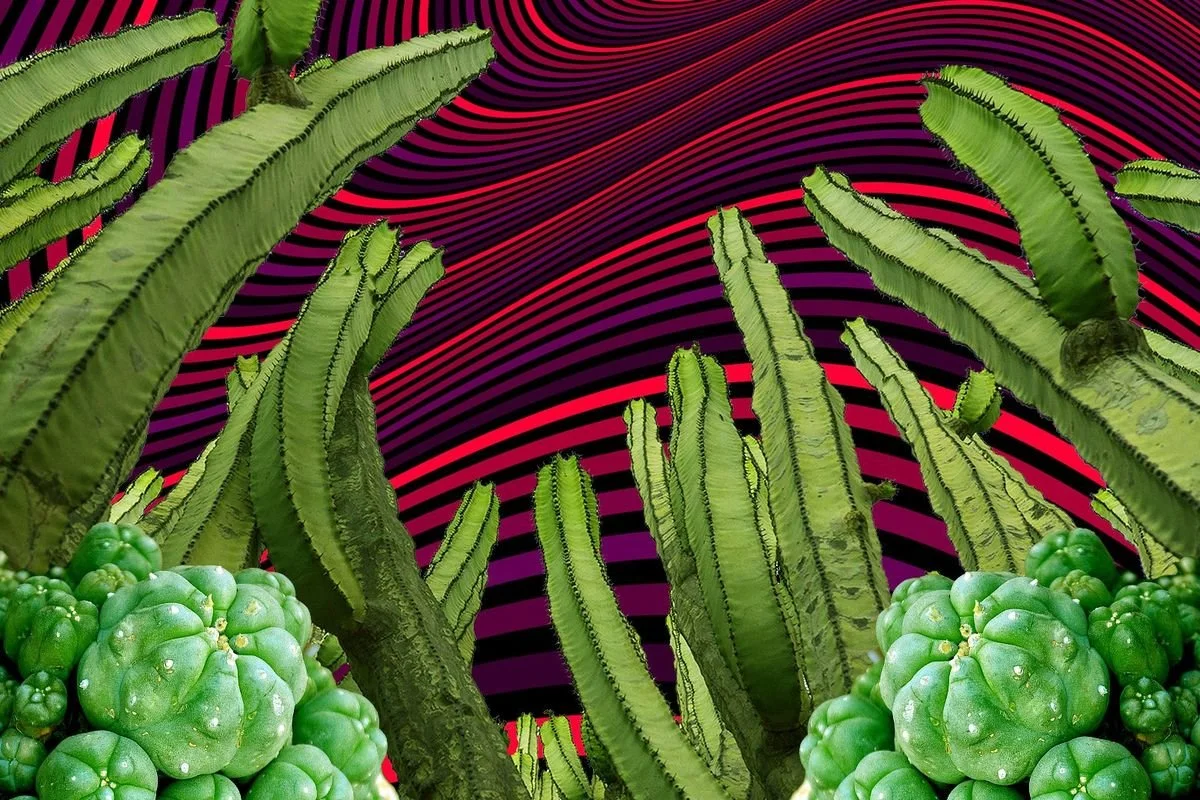
Let’s get the nomenclature out of the way, because it’s a bit of a mess. Botanically, we’re talking about Echinopsis pachanoi (or Trichocereus pachanoi if you’re old school). In the Quechua tongue, it’s Wachuma (or Huachuma). But most people know it as San Pedro.
The story behind that name is actually kind of hilarious in a historical irony sort of way. When the Spanish conquistadors rolled into the Andes, they saw the indigenous people talking to a cactus. Naturally, the Catholic Church wasn't thrilled. But instead of the tradition dying out, it morphed. The cactus became “San Pedro” because, according to Christian tradition, Saint Peter holds the keys to the Gates of Heaven. The locals basically said, "“Yeah, that sounds about right. This plant is the key. Let's keep the name.”
It’s a survivor. It’s been used for over 3,000 years: we’ve found Chavín pottery from 1200 BCE depicting priests holding these ribbed stalks. Think about that for a second. While the Roman Empire was barely a glimmer in anyone's eye, people were sitting in circles in the Peruvian highlands, seeking wisdom from a succulent.
The Chemistry vs. The Spirit
If you look at a lab report, Wachuma is a delivery system for mescaline. It’s a phenethylamine, related to MDMA in structure but very different in effect. Western science loves to pin it down: “It’s an agonist of the 5-HT2A receptor.” Great. Cool.
But talk to a Wachumero (a traditional healer) and they’ll look at you like you’re explaining the “physics” of a hug. To them, the mescaline is just the bridge. The real work is done by the Spirit of the Plant.
I used to be a total skeptic. I wanted the double-blind studies. I wanted the peer-reviewed data. But after sitting with this medicine in the Sacred Valley, watching the stars literally seem to rearrange themselves into geometric tapestries of “belonging,” logic feels like a very small tool for a very big job.
Why Is It Suddenly "Trending"?
For years, Wachuma stayed under the radar. It wasn't “sexy” like the psychedelic renaissance in Silicon Valley or the celebrity Ayahuasca retreats in Costa Rica. Why? Because it’s long. A Wachuma journey isn't a 4-hour trip; it’s a 12-to-16-hour commitment. It’s a marathon of the soul.
But lately, people are burning out on the “intensity” of other medicines. We live in a world of high-definition stress. Sometimes, we don't need a “heroic dose” of ego-death; we just need to feel sane again.
The Gentle Revolution
Wachuma is gaining traction in the West because it’s “heart-centered.” It doesn't typically induce the terrifying "who am I and why is my face melting" visuals. Instead, it offers a “clear lens.” It feels like being the most authentic version of yourself you’ve ever met.
I think we’re all just tired. We’re tired of the filters, the algorithms, and the constant performative nonsense of modern life. Wachuma feels like an antidote to that. It’s “factory settings” for the human heart.
The "Dirty Lens" Theory (And How the Cactus Cleans It)
Eventually, the “movie” of your life looks dark, blurry, and depressing. You think the world is the problem. You think your life is a tragedy. But really, you’ve just got a filthy lens.
Wachuma is Windex for the soul.
It doesn't give you a new life. It doesn't hand you a “miracle” (though some people claim they happen). It just cleans the glass. You look out and realize, “Oh, wait. The world is actually beautiful. I’m actually okay. I’ve just been looking through a layer of garbage for twenty years.”
It’s Not Altering; It’s Purifying
This is a key distinction. People often ask, “What will it make me see?” Wrong question. Ask, “What will it help me stop seeing?”
It helps you stop seeing the “filters” of your ego. It helps you stop seeing the “shoulds” and “musts.”
When those are gone, what’s left is just... you. Grounded. Still. Connected.
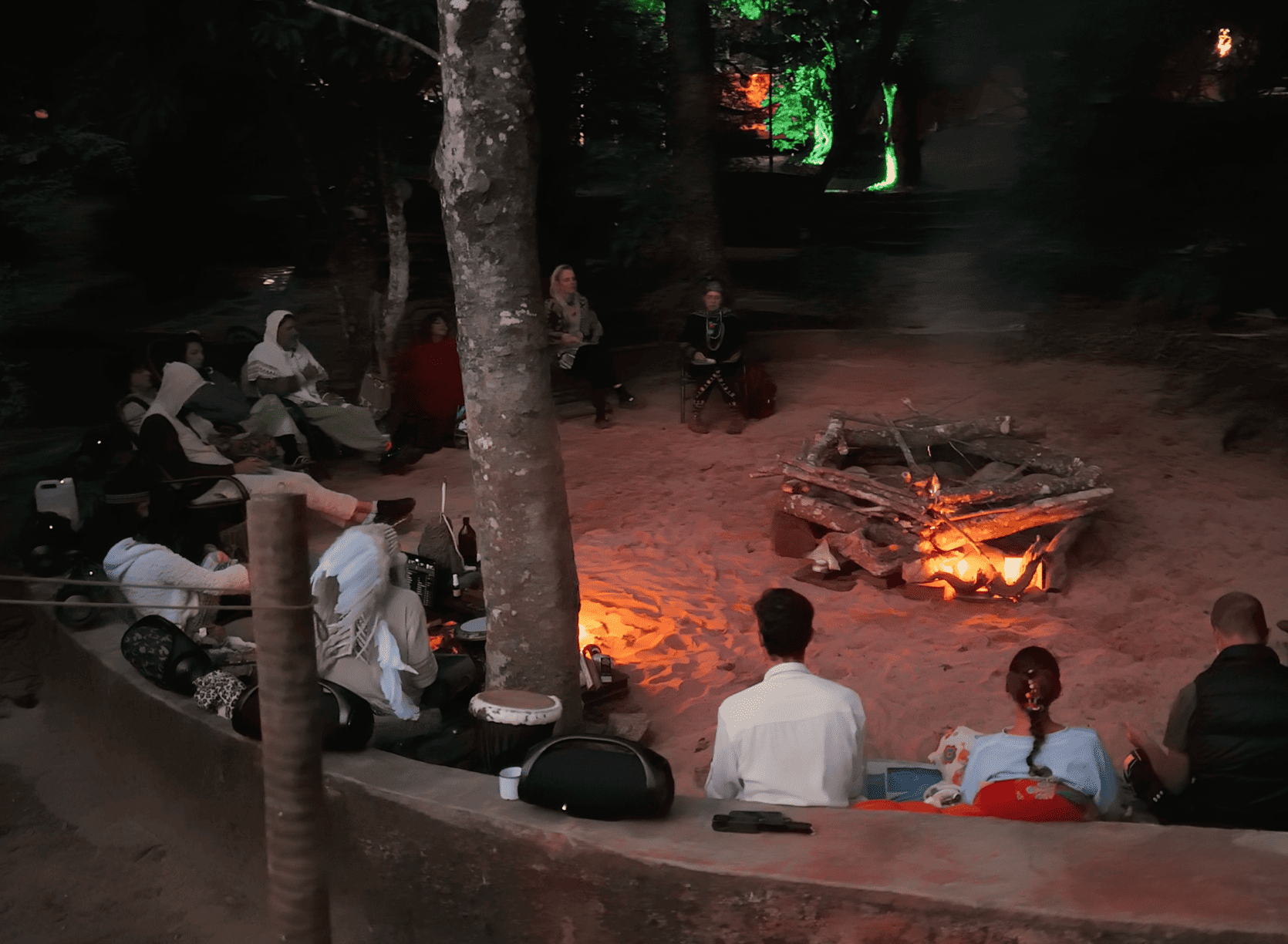
- San Pedro ceremony at Gaya Kali Center
The Benefits: What Are We Actually Doing Here?
If you’re looking for a list of “pros,” it’s long. But keep in mind, this isn't a pharmaceutical pill. You don't just "take" it and get the benefits. You work with it.
1. Emotional Decompression We carry so much “unprocessed” junk. Conversations we didn't finish. Grief we didn't cry out. Wachuma provides a “container” for that. Because you’re not “tripping balls” (to use the technical term), you can actually think. You can look at a memory of your father and instead of feeling the usual sting of resentment, you might just feel... understanding. “Oh, he was just a man who was also hurting.” That kind of insight is worth ten years of talk therapy.
2. Radical Presence Have you ever actually looked at a leaf? I mean, really looked at it? Under the influence of the Grandfather, a leaf isn't just a leaf. It’s a miracle of biological engineering. It’s a fractal of the universe. This might sound like “stoner talk,” but it’s actually about presence. For the first time in your life, you aren't thinking about your emails or your rent. You’re just here. And “here” is a pretty incredible place to be.
3. Healing Generational Wounds This one is a bit “woo-woo” for some, but I’ve seen it happen. People go in with deep-seated patterns they realized they inherited from their parents, who got them from their parents. Wachuma helps you see the "code" of your family. It gives you the “admin privileges” to go in and delete the files that aren't serving you anymore.
4. Purpose and Direction Sometimes we’re just lost. We’re walking in circles in a dark forest. The cactus doesn't give you a GPS, but it does thin the fog. You might realize, “I don't actually want to be a lawyer. I want to build furniture.” It sounds simple, but when that realization comes from a place of deep, heart-centered truth, it’s life-altering.
The Ceremony: What to Expect (Expect the Unexpected)
Every ceremony is a snowflake. I’ve been in some that felt like a quiet meditation in a garden, and others that felt like a rowdy, 12-hour folk concert.
The Taste (The First Hurdle)
Let’s be honest: Wachuma tastes like a mixture of bitter grass and battery acid. It’s not pleasant. It’s thick, it’s snotty, and your body will immediately say, “Why are we doing this?”
But that’s part of the deal. It’s an “engagement.” You’re showing the plant you’re serious.
The Timeline
0-2 Hours: The “Wait.” You’ll probably feel some nausea. This is the “purge” phase. Sometimes it’s physical (you might throw up), but more often it’s energetic. You might feel “fidgety” or anxious. That’s just your ego trying to find its car keys before the doors lock.
2-6 Hours: The “Ascent.” The world starts to look “saturated.” Colors are brighter. Nature looks like it’s breathing. You’ll feel a “spaciousness” in your chest.
6-12 Hours: The “Plateau.” This is the heart of the work. This is where the deep conversations happen: either with the healer, the people around you, or just with yourself.
12-16 Hours: The “Glow.” You’re coming back, but you’re different. You’re tired, but your soul feels like it just had a long, hot bath.
The Role of the Healer
Do you need a shaman? Technically, no. You could buy a cactus and cook it in your kitchen. But I wouldn't recommend it. A good healer acts as the “anchor.” When the energy gets big, and it can get very big, you want someone there who knows the terrain. They use music and their own presence to keep the space "safe."
The "Purge": Let's Talk About Vomiting
In the West, we think vomiting is a sign that something is wrong. In the world of plant medicine, it’s a sign that something is working.
They call it “la purga.” You aren't just getting rid of the bitter cactus juice. You’re getting rid of the “Hucha”: the heavy energy. I’ve seen people purge and then immediately start laughing because they felt twenty pounds lighter. If it happens, embrace it. It’s a gift. (Just make sure you have a bucket.)
Integration: The Most Important Part No One Talks About
You have this massive, 14-hour epiphany. You realize we are all one, love is the only currency, and you need to forgive your ex. Then you go back to London or New York or Berlin. You get stuck in traffic. Your boss is a jerk. Your WiFi is down.
This is where the real medicine starts.
If you don't “integrate” the experience, it was just a fancy hallucination. Integration is the process of taking those “downloads” and actually applying them.
Did you realize you need to be more patient? Cool. Practice it while waiting in line at the grocery store.
Did you realize you’re disconnected from nature? Great. Buy a plant. Go for a walk without your phone.
Wachuma gives you the "map." But you still have to walk the trail.
Comparing the "Big Two": Ayahuasca vs. Wachuma
I get asked this all the time. “Which one should I do?” It’s like asking, “Should I take a flight or a train?” They both get you to the destination, but the scenery is different.
For many, Wachuma is a better “entry point.” It’s less “destabilizing” for the ego. But don't mistake “gentle” for “weak.” Sometimes the most profound changes happen when you’re fully “awake” to see them.
Setting Intentions: Don't Go In Blind
If you go into a Wachuma ceremony “just for fun,” the cactus will probably just give you a nice day in the park. But if you go in with a specific question, he will answer.
“Show me why I’m so angry.”
“Help me find my creative spark again.”
“Teach me how to be a better father.”
Write it down. Carry it in your pocket. Treat it like a contract. The cactus respects a person with a plan.
The Logistics: Where to Go?
You can find Wachuma retreats all over South America.
What to look for in a retreat:
Experience: How long has the healer been working?
Small Groups: You don't want to be in a room with 50 people. 6-12 is the “sweet spot.”
Integration Support: Do they help you process the experience afterward?
A Final Thought from a Fellow Traveler
Wachuma is a reminder that life is supposed to be beautiful. It’s our birthright. We weren't born to sit in cubicles and worry about our credit scores. We were born to be in “Spirit.”
Consulting with this wise teacher isn't a “magic pill.” It won't fix your life overnight. But it will give you the vantage point you need to fix it yourself. It whispers the truth to you. And if you’re brave enough to listen, really listen, you might just find that the “heaven” Saint Peter was guarding isn't some place in the clouds.
It’s right here. It’s always been here. You just needed to clean your lens.